How to Hand Pollinate Squash
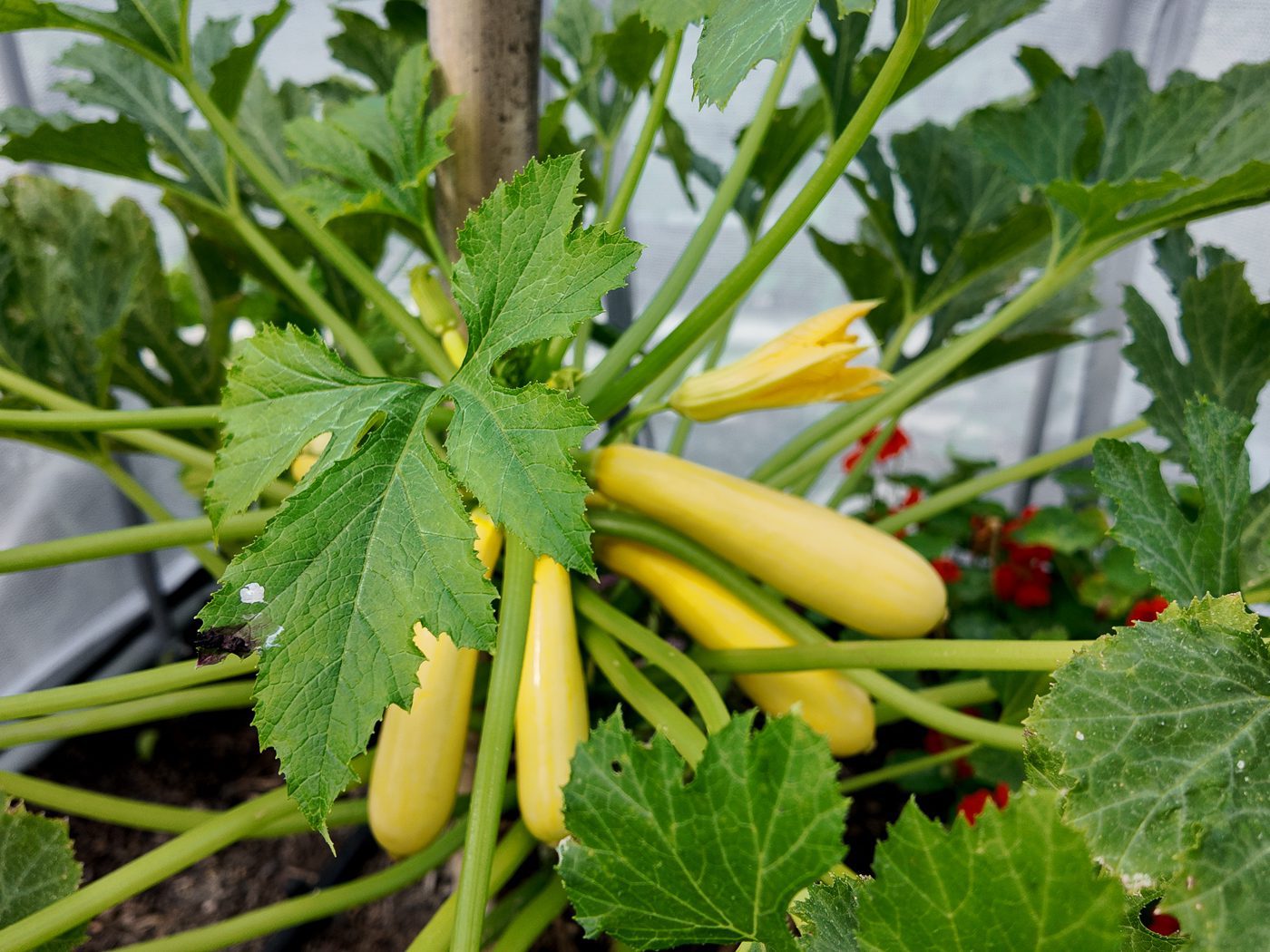
Does growing squash frustrate you as much as it frustrates me? I love squash, especially yellow summer squash. Unfortunately, garden pests love it, too.
If you’ve ever grown squash, you know about two of the biggest pest offenders: squash bugs (Anasa tristis), which look a lot like stink bugs, and squash vine borers (Melittia cucurbitae), which is a moth that spends its larval stage tunneling inside the stems of squash plants.
Both are destructive, but squash bugs can generally be controlled by squishing adults and removing egg clusters. Borers, however…once one hatches and gets inside of a stem, it can be extremely difficult to save a plant.
The best way to protect your squash plants from pests is to cover them with insect netting. However, doing so prevents insects from pollinating the plant, which is what you need to grow fruits! So if you want to cover your plants, you’ll need to hand pollinate. It’s an easy process that this article will walk you through 🙂
Locate a male flower first
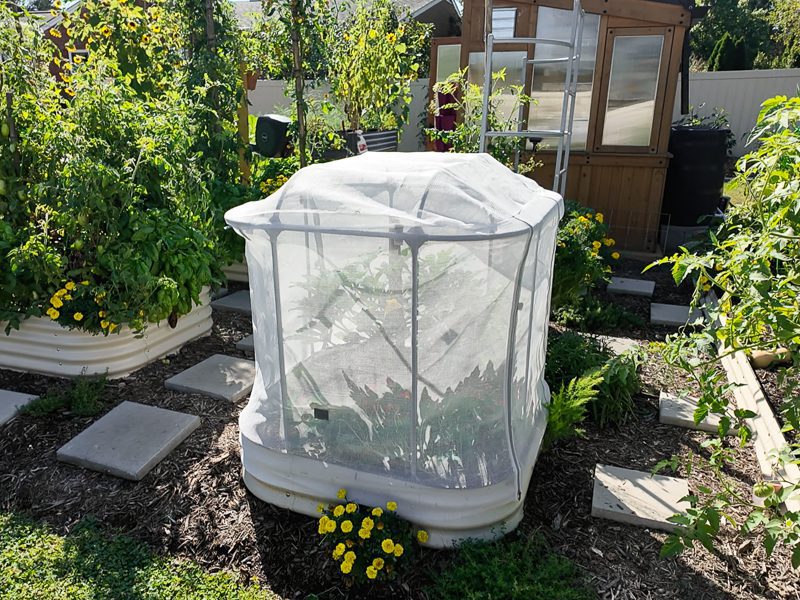
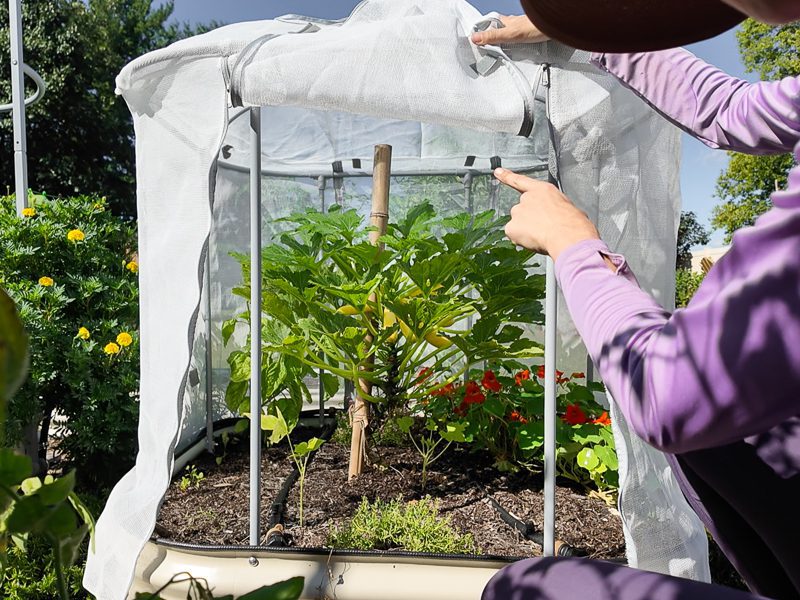
Before you can get to pollinating, you’ll need to learn the difference between male and female flowers. Let’s take a look at my Smooth Criminal vertical squash below. I have this covered by a Vego insect netting cover, which is a super handy way to protect plants while also ensuring easy access.
You pull it snug over the frame, and there are zippered panels on either side. Easily access your plants by zipping open the flaps and flipping them up! Big fan of this system, which is also interchangeable with the frost protection plastic greenhouse cover.
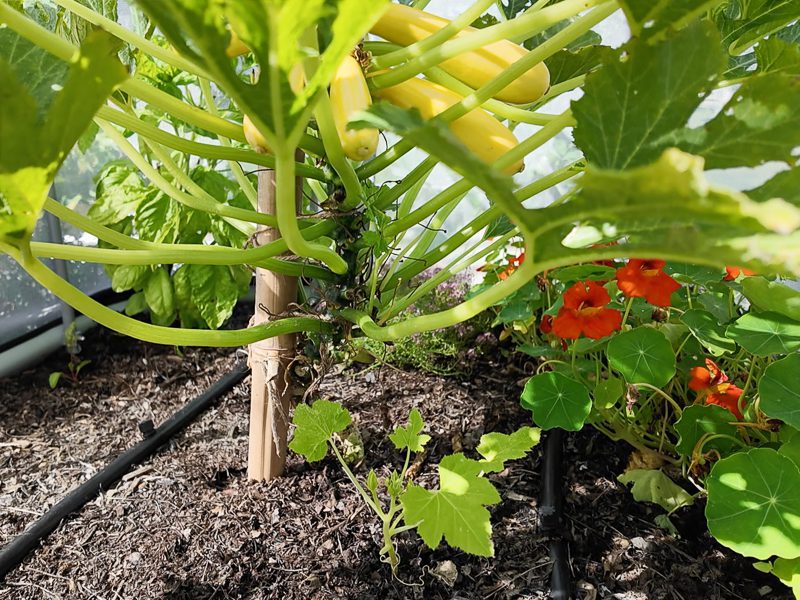
Male vs. female flower examples
Not all flowers on a plant will produce fruit. The female flowers are the ones that produce fruit. However, they need to be pollinated by a male flower to do so. It’s just like making a baby.
Flying insects will usually take care of this for us. But when the plants are covered, insects can’t reach the flowers. So you’ll need to manually take pollen from a male flower and put it into a female flower.
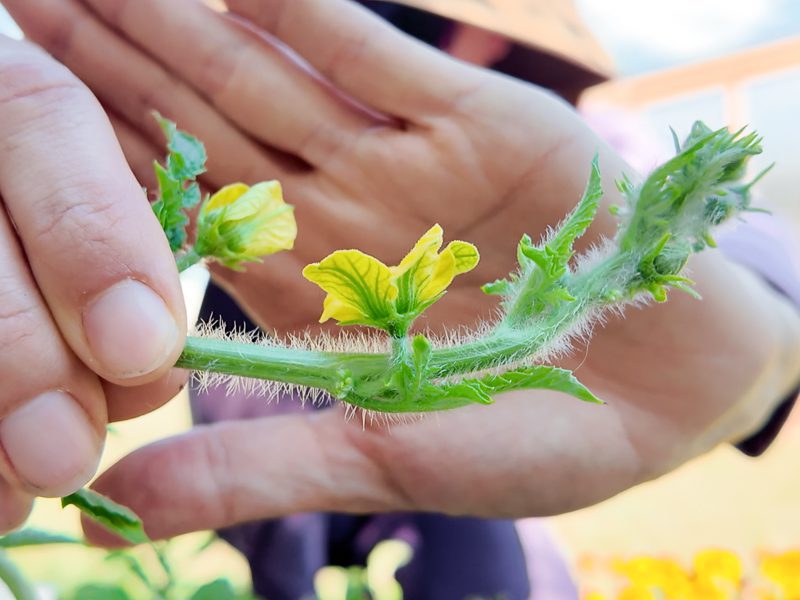
The first photo below is an example of a male flower. You can tell it is a male flower because it does not have a very tiny squash at the base of the flower. The second photo is another example of a male flower. It just goes straight from the stem to the flower.
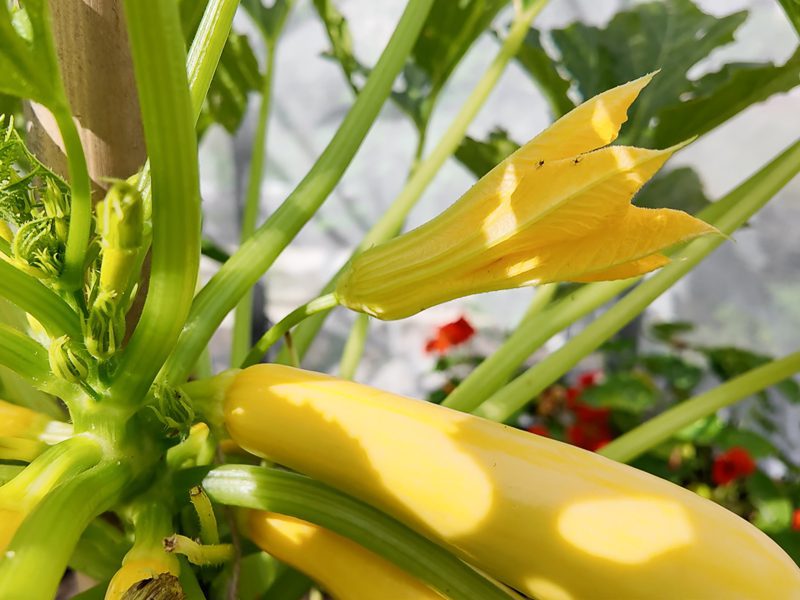
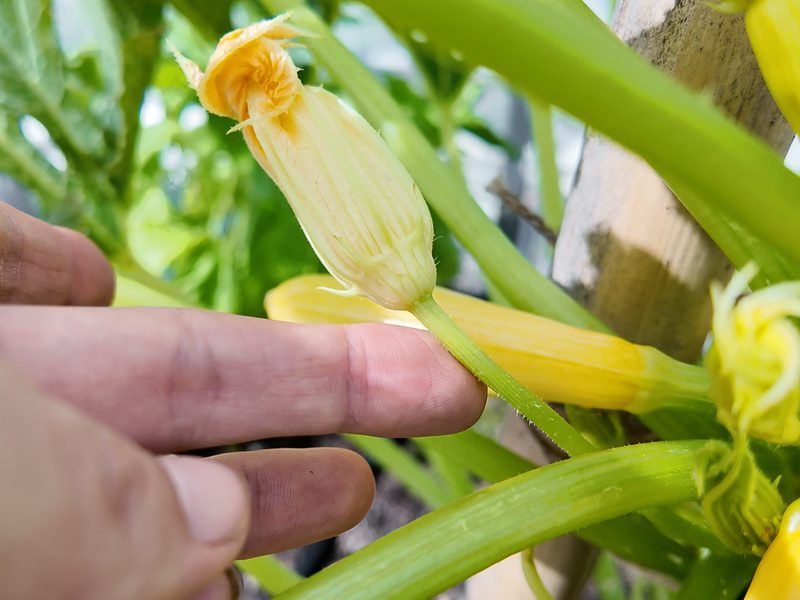
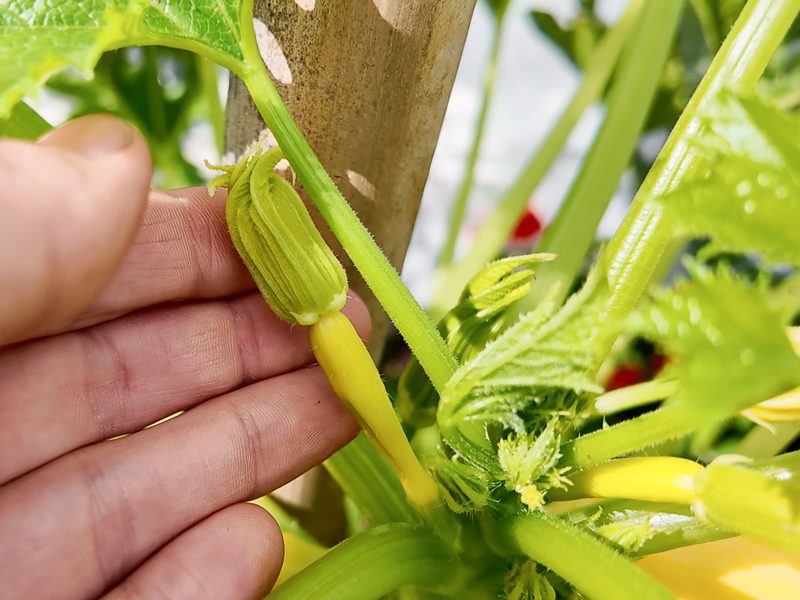
Now let’s look at a female flower. Below is an example of the start of a female flower. The flower hasn’t fully opened yet, but you can see exactly what I mean by a tiny fruit. There is a tiny yellow squash at the base of this flower!
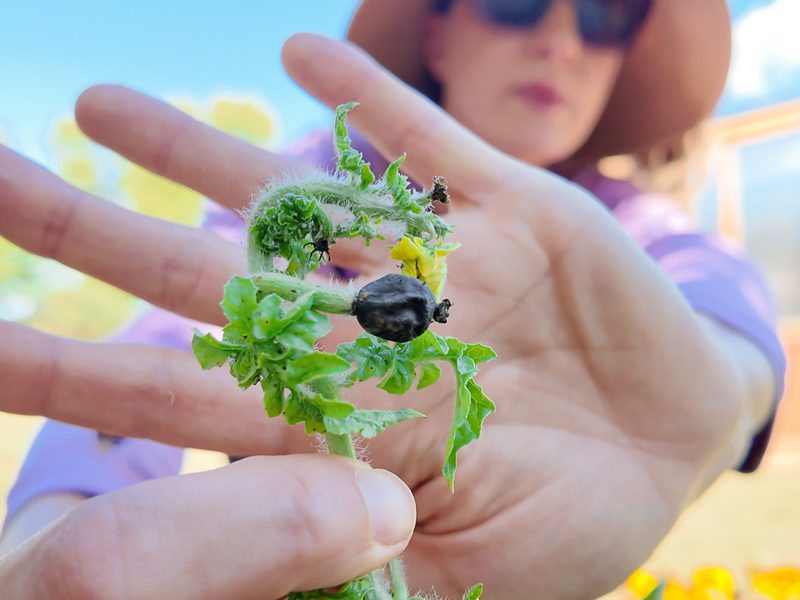
If the flower is not pollinated, the fruit will shrivel up, rot, and fall off. If it is pollinated once the flower opens, the flower will fall off, and the squash will begin to grow rapidly.
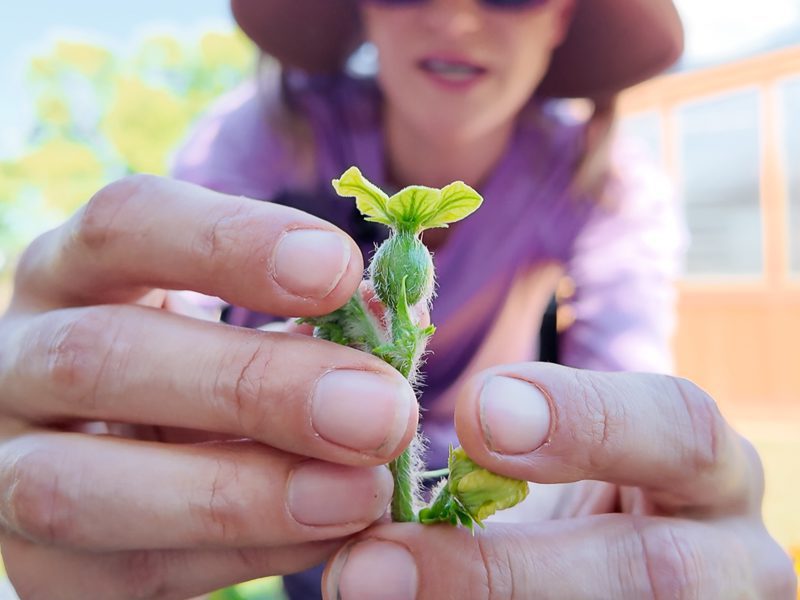
Here is another example of male and female flowers on a watermelon plant, which is another cucurbit (the name for plants in the gourd family). The first photo shows a male flower because there is just a stem. There is no tiny watermelon at the base of the flower.
The second photo shows a female flower, which is evident by the teeny tiny watermelon at the base of the flower. The third photo with the mushy little black watermelon shows what happens when a female flower isn’t pollinated. No fruit 🙁
Pollinating with a paintbrush
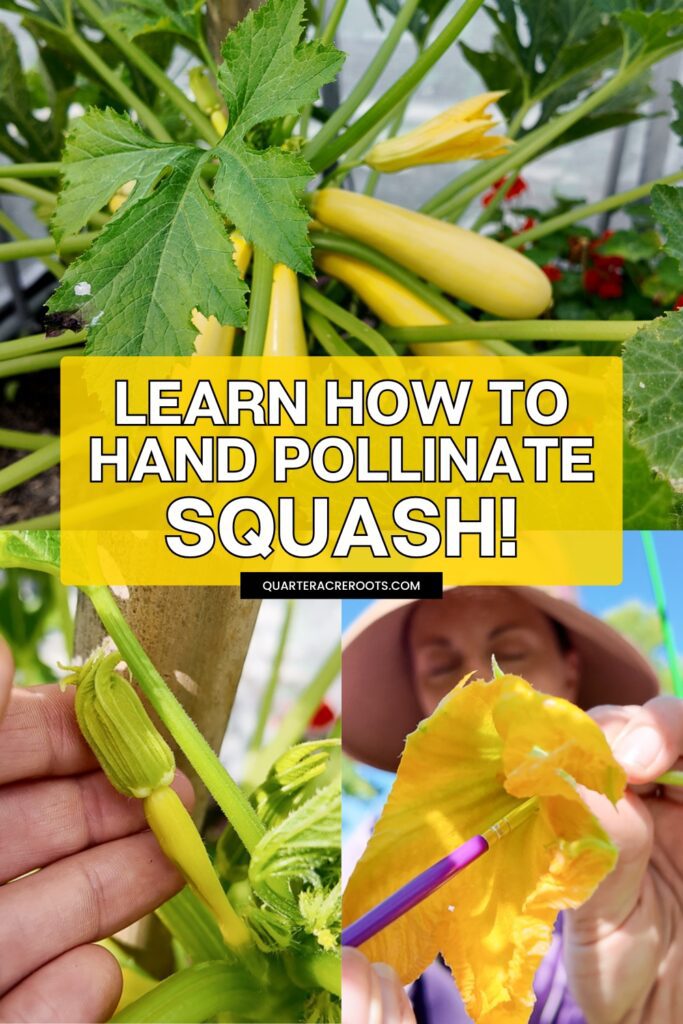
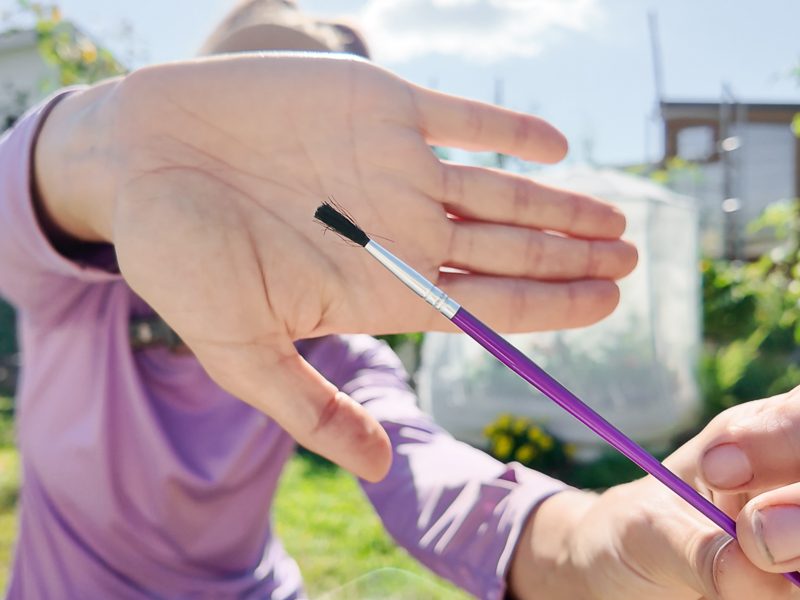
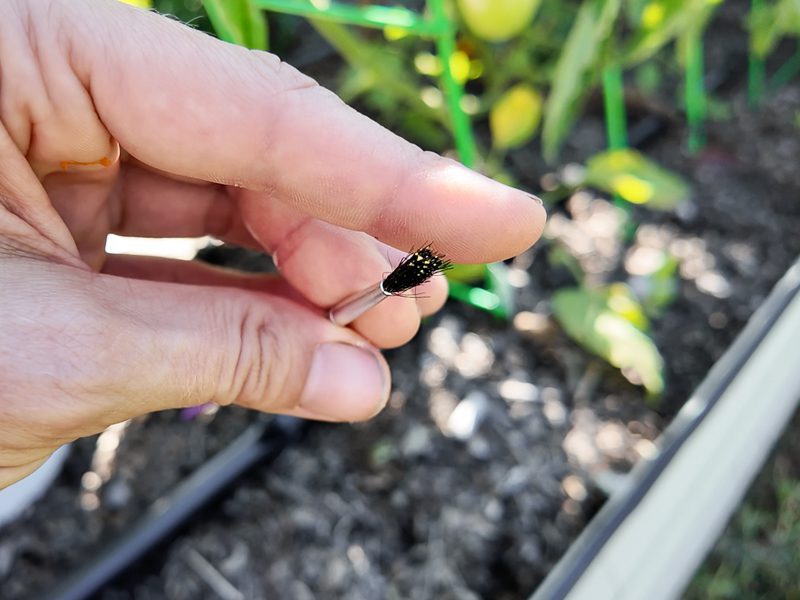
I like to use a small paintbrush for hand pollination. This is just a cheap brush from one of my daughter’s art kits. You can also use Q-tips and similar smaller things…some people also just mush the flowers together!
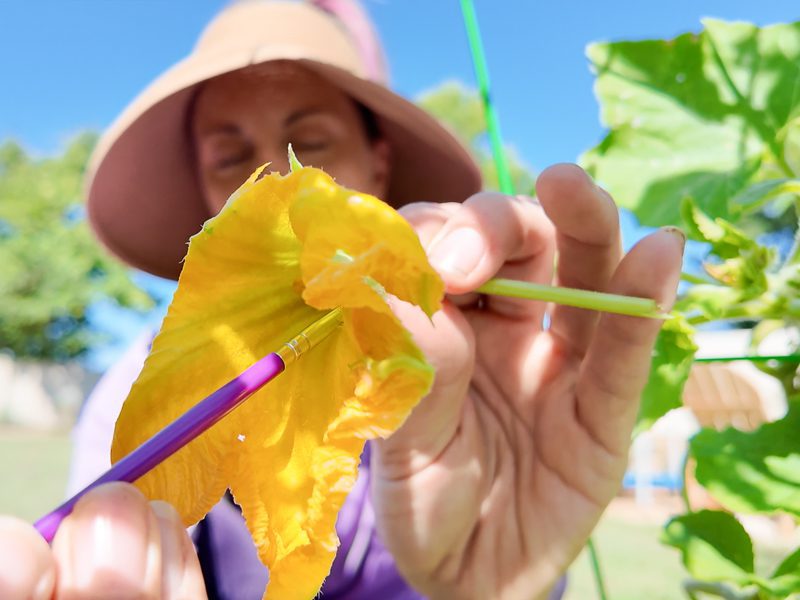
Just take the paintbrush and brush around inside of a male flower. Make sure you get some of the yellow pollen granules on your brush. Then take that brush and swish it all around down in the inside of a female flower you’d like to pollinate. That’s it. That’s all you have to do!
What to do if there isn’t a male flower
Depending on the size of your garden and the number of plants you’re growing, you might end up in a situation where you have a female flower ready for pollination but no male flower open. The good news is that if you are growing different types of squash, you can cross-pollinate them!
That means that you can use male flowers from other types of squash to pollinate female flowers. For example, you could use a male flower from an acorn squash plant to pollinate a female flower from a yellow summer squash plant.
This was especially handy for me in my 2025 garden because I had several winter squash plants and only one summer squash. I routinely found myself with female flowers on the yellow squash plant that had opened just after a male flower had wilted and died off. So I used male flower pollen from my acorn squash plants.
Just keep in mind that you can’t cross-pollinate squash with cucumbers or melons because they are a different species of cucurbit. Also, while cross-pollination does not affect the current year’s fruit, it will affect the fruit’s seeds. So if you’re saving seeds from your crop to plant next year, you might want to avoid cross-pollination.