My Favorite Late-Blooming Natives
Over the last few years, I’ve been making the push to fill our yard with native plants. One huge benefit of native plants is that they have evolved to grow where you live, meaning they often have few problems, need less water, and are generally easier to care for.
They can also provide valuable food sources for pollinators, so it’s important that you plant things that bloom early and late! People don’t often think about flowers blooming in the fall, but late-blooming native plants are super important for pollinators that are still out and about. So let’s talk about five of my favorite late-bloomers and why I love them.
Aromatic aster
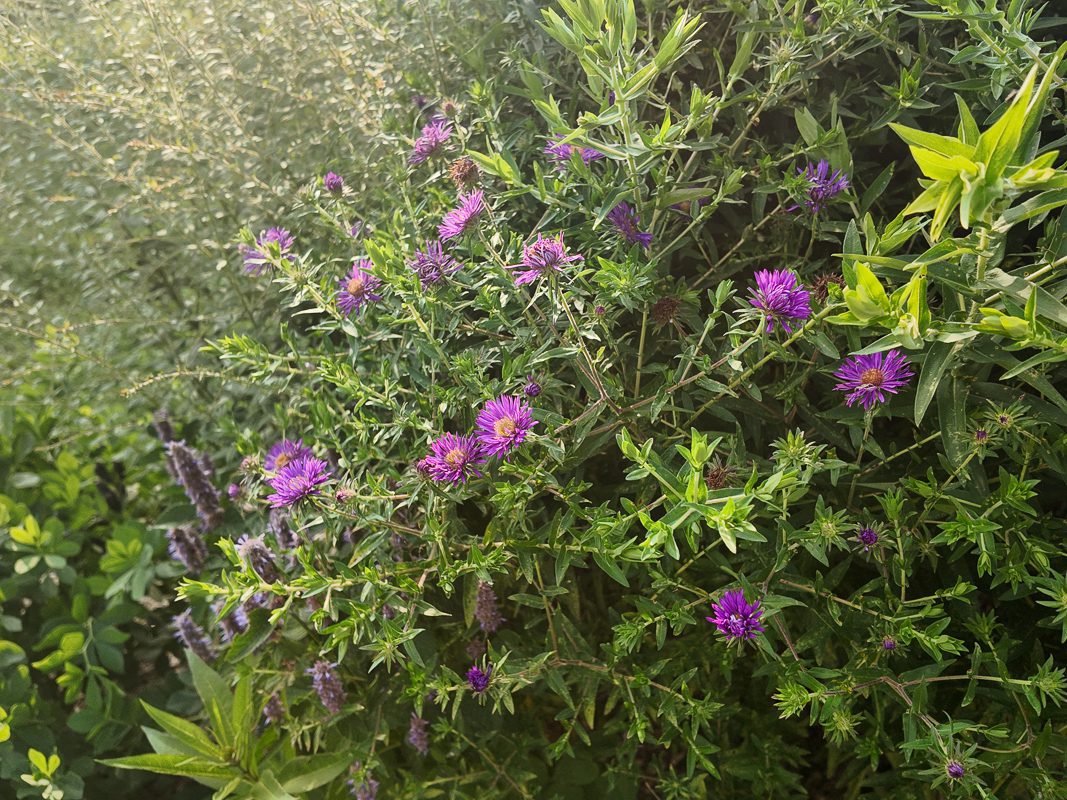
Symphyotrichum oblongifolium, often referred to as simply aromatic aster, is an excellent addition to a native plant garden because it provides super late-season blooms. I have seen my plant flowering straight through frosts, if that tells you anything!
The flowers look like tiny daisies, and there are different colors. The straight species type has a purple flower, but there are lots of different types. I have a type called Symphyotrichum oblongifolium ‘Raydon’s Favorite,’ which has gorgeous periwinkle flowers.
Aromatic aster is also super adaptable and low-maintenance. It thrives in multiple different places in my garden with very little attention. After its first growing season, I stopped watering it, letting mother nature handle things. It has held up extremely well, even during periods of drought.


Goldenrod
Solidago, aka goldenrod, is a total powerhouse in native plant gardens, blooming from late summer into fall. It serves as a crucial food source for migrating monarchs and supports a wide diversity of specialist native bees that rely on goldenrod’s nectar exclusively.
There are quite a few different types of goldenrod you can choose for your garden. It is extremely resilient and will spread readily, especially the straight species variety. If you aren’t able to accommodate its size and spread, you can choose a smaller cultivar instead.
Regardless of the type of goldenrod you plant, its bright yellow flower plumes are a striking contrast against fall’s fading foliage. I love how the yellow looks next to the periwinkle color of my Raydon’s Favorite aster, too!

Yarrow
Next up, yarrow! Its full Latin name is Achillea millefolium, and it’s a valuable native plant thanks to its exceptional adaptability. It thrives in poor, dry soils where many other showy ornamentals cannot, and it’s super drought-tolerant once it is established.
The straight species type of yarrow you’re likely to find in nature has white flowers, and it is an aggressive spreader with feathery, weedy-looking foliage. It’s quite pretty as a prairie plant, but for this reason, it also isn’t always the best choice in a backyard if you’re limited on space.
Instead, you might want to check out one of the cultivars of yarrow on the market. I have yellow, red, peach, and hot pink! What can I say, I love yarrow 🙂 And I love propagating yarrow and sharing with others.
The gorgeous flat-topped flower clusters are important summer food sources, but I find that it is a perennial that can get really floppy with no maintenance. So I like to cut back all of my yarrow’s blooms once they start fading. As a bonus, doing so usually gives me a second smaller flush of blooms in the fall! Great for the pollinators and for some fall color in the garden.


Coneflowers
Coneflowers, or Echinacea, are similar to yarrow in that I can usually cut them back mid-summer to get a second flush of blooms in the fall. Coneflowers are a classic native flower that bloom reliably and support loads of pollinators. They also look so good in arrangements.
Even after the flowers die off, they look super cool on the plant. The large, spiky seed heads are important food sources for birds into the winter, so make sure to avoid cutting them back in the fall!
They are also remarkably hardy, thriving in full sun with minimal maintenance. Coneflowers tolerate heat, drought, and poor soil, and their deep taproots help them remain resilient during dry periods. Seriously—the foliage on my coneflowers soldiers through droughts like a champ.


Switchgrass
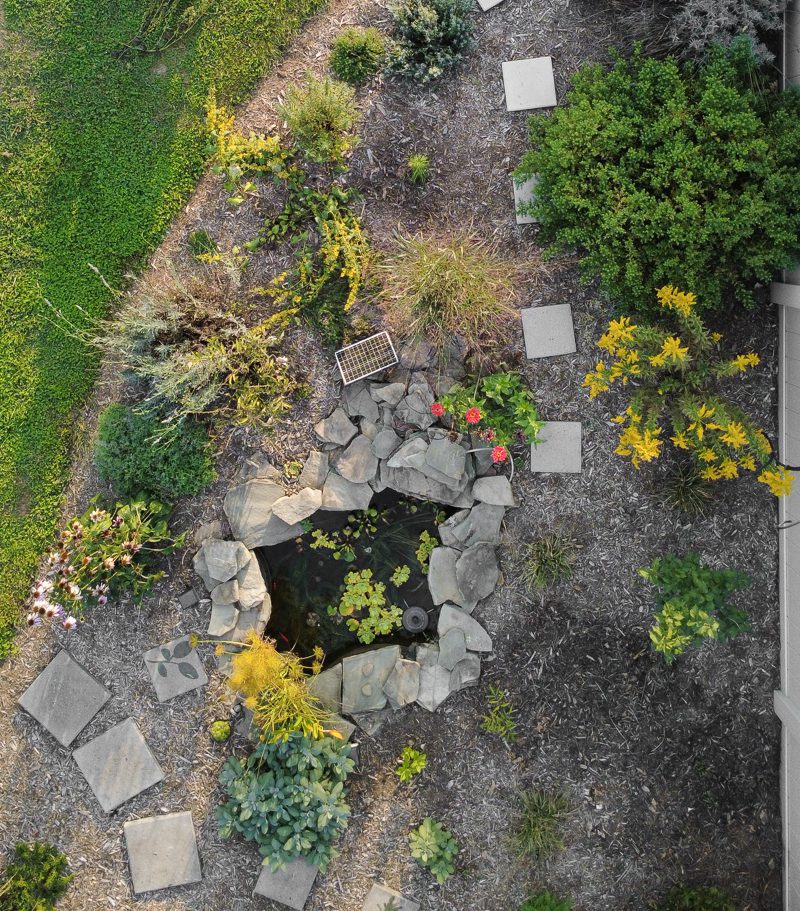
This last one is a little different because it’s a grass. Panicum virgatum, commonly referred to as “switchgrass,” is a lovely native prairie grass. I have Panicum virgatum ‘Shenandoah’ around our pond. It’s a more compact cultivar of the straight species.
Switchgrass has a dense, upright growth habit that helps to reduce soil erosion and improve soil structure. I love Shenandoah switchgrass because it emerges green in the spring and slowly morphs into more of a burgundy. By fall, it’s a lovely red with gorgeous billowing clusters of seed heads.
These seed heads look lovely in fall cut flower arrangements and provide food for birds, and the red foliage on the plant adds a lot of visual interest later in the season. As with most native plants, switchgrass is super tough and thrives in lots of different soil conditions, including the rocky clay-based soil we have so much of!
The shot of our pond below shows almost all of the plants in this post. The Shenandoah switchgrass is to the right of the little solar panel. Next to the switchgrass is a goldenrod, and another goldenrod is on the right by the fence. A coneflower is near the left edge of the pics, and finally, the green shrub at the top-right of the photo is an aster before it bloomed 🙂