Propagating Currants & Gooseberries
I’m writing this post in December in Maryland zone 7, where it’s currently 20 degrees and we have a few inches of snow. You might not think this is the best time to propagate plants…but for some, it is!
Rooting plants in the Ribes genus, currants and gooseberries, is best done using hardwood cuttings. And the best time to take and plant hardwood cuttings for propagation is in the winter when the plant is dormant.
So although my fingers are freezing, this really is the best time to get started on some currant and gooseberry cuttings for the spring! Let’s walk through how to take and plant the cuttings.
Step 1: Take a cutting
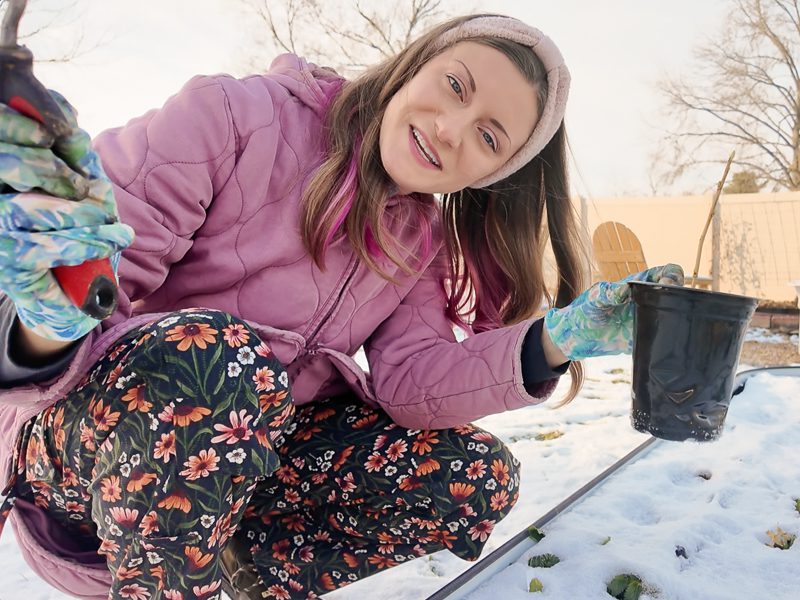
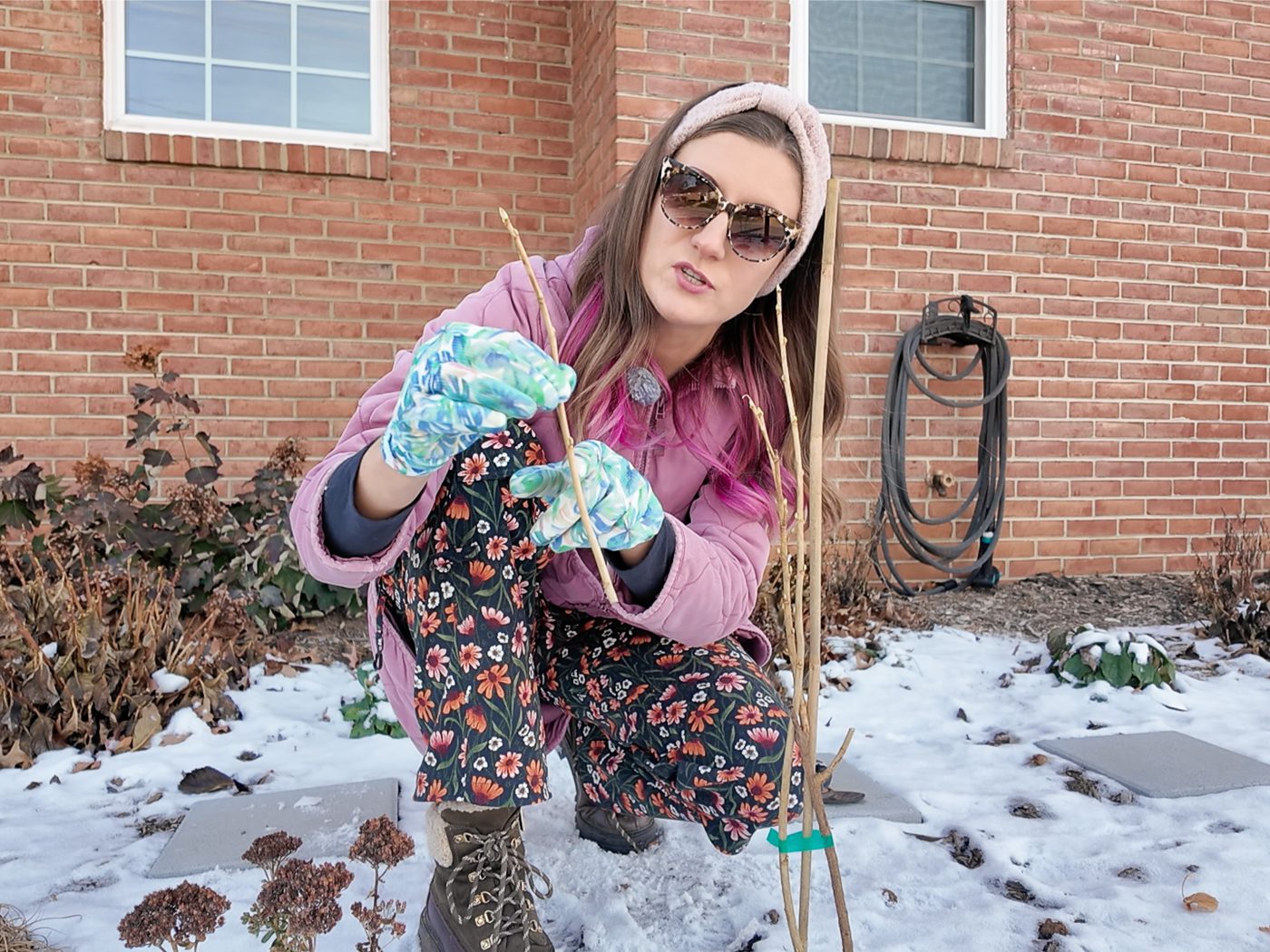
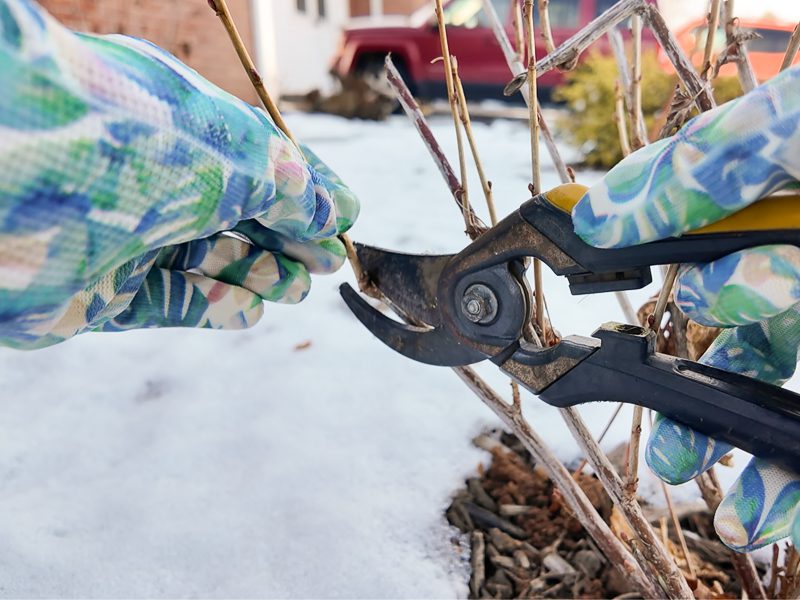
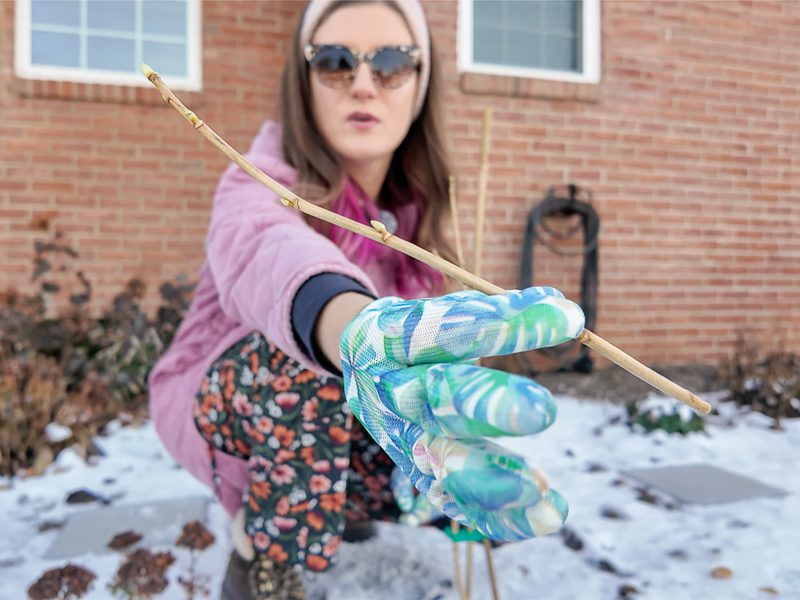
The first step is to take a cutting. You want to take a cutting from last year’s growth and make sure it is about 6-8 inches long. This length will ensure you have enough growth points (where the leaves sprout from) to bury some for rooting and leave some out of the soil for buds.
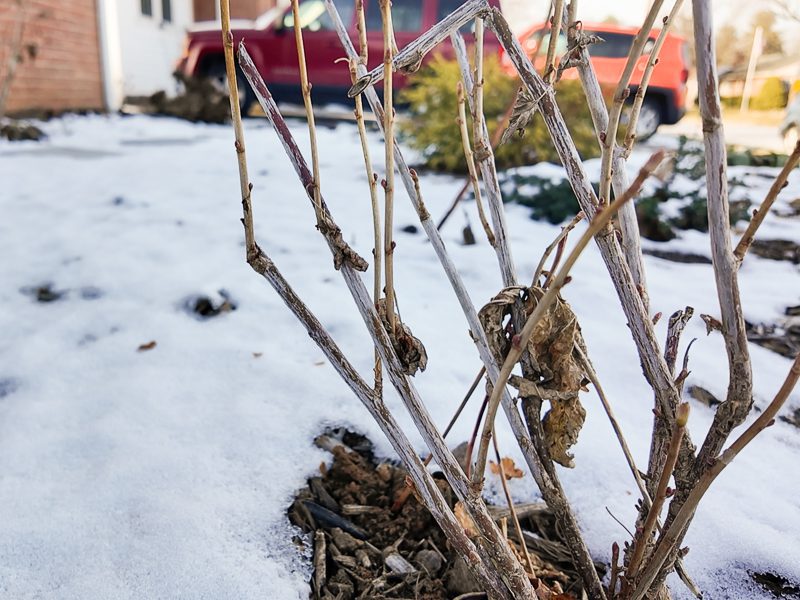
Below is an example of a good spot for a cutting on one of my black currant plants. You generally want the width of your cutting to be about the width of a pencil. However, the stems on this variety of currant are just a bit skinnier.
If you can, take the cutting from just below a growth point. All of mine were top cuttings, so it was clear which end was the bottom. But if you’re taking a cutting and chopping it up further, make sure to mark which end is the bottom!
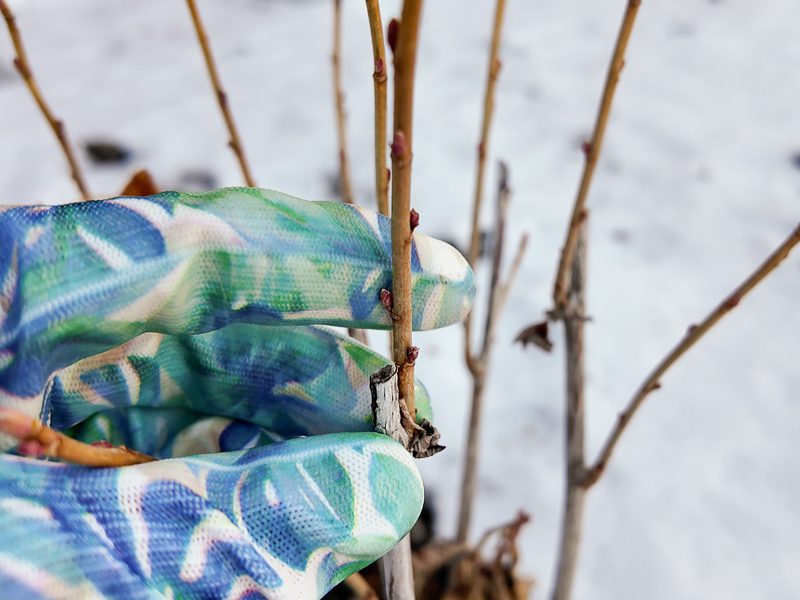
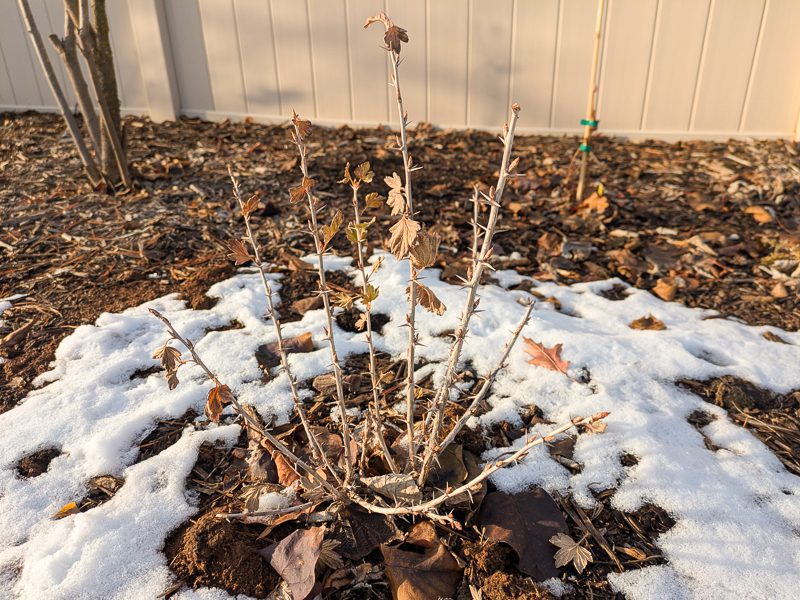
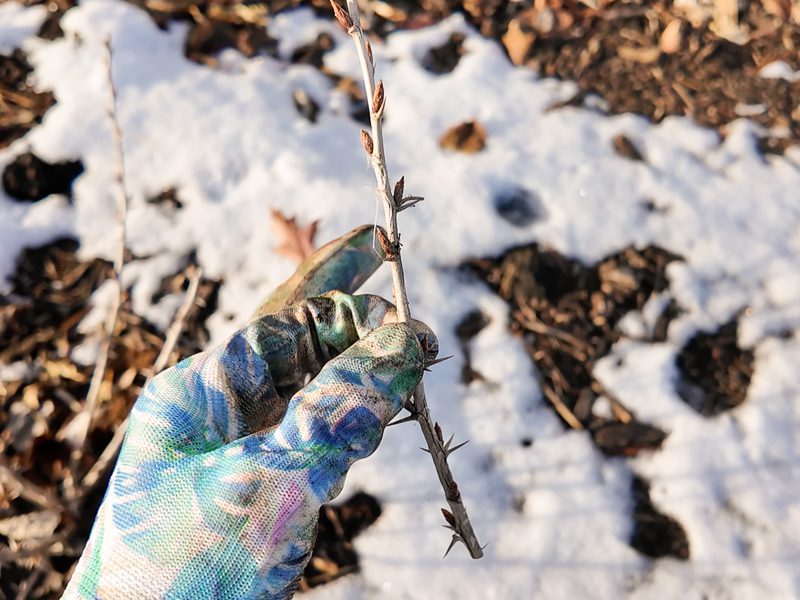
And here is a quick example of a gooseberry plant cutting. I find that gooseberries are much easier than currants to propagate in the spring and summer when they are actively growing, but they also propagate well using hardwood cuttings while the plant is dormant.
Take a similar approach—look for a cutting that is 6-8 inches long and healthy. And be careful of those thorns on gooseberries!
Step 2: Pot cutting
Next it’s time to pot the cuttings. Some people choose to just stick the cuttings directly down into soil where they want the plant to grow. That’s fine to do if you are a gambler, but I’m not much of a gambler. I like to put propagations up separately so I can keep a closer eye on them.
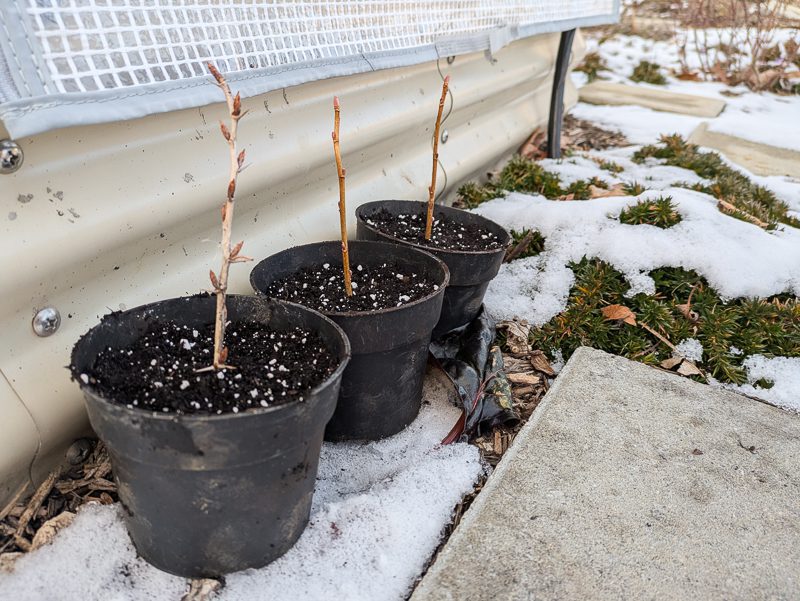
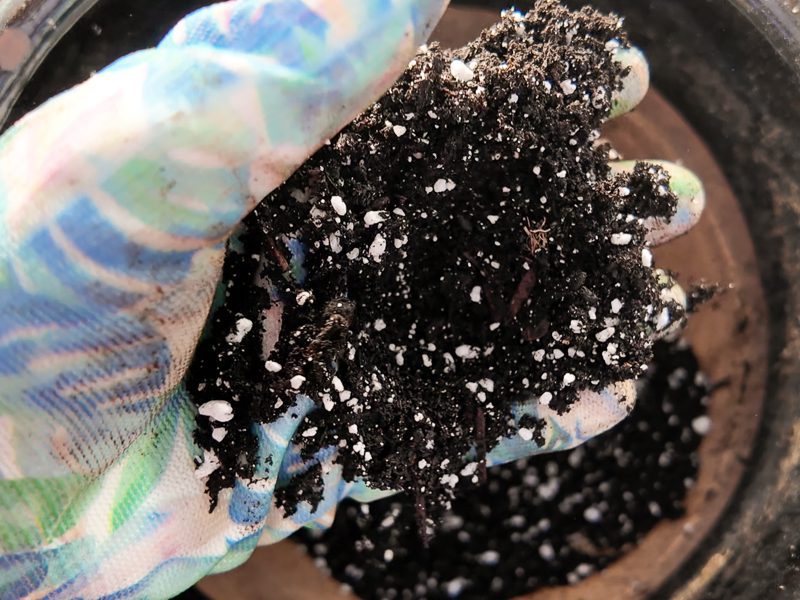
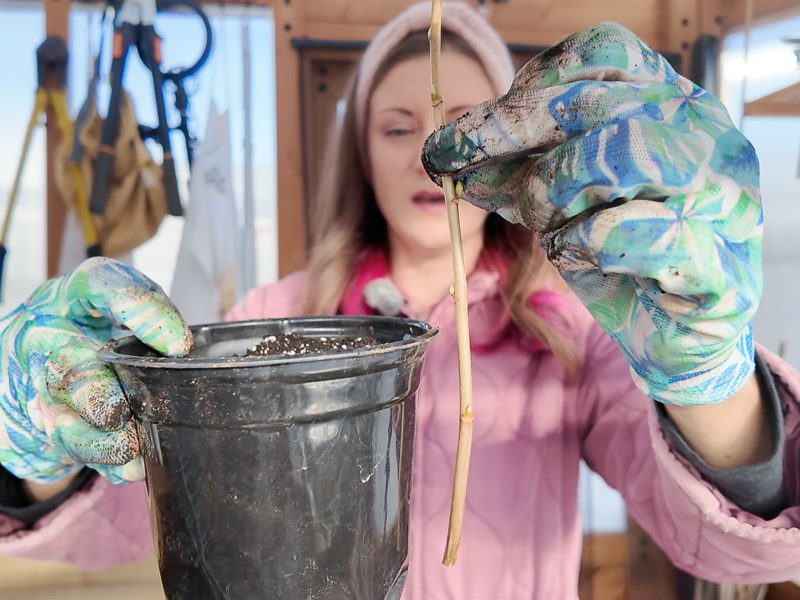
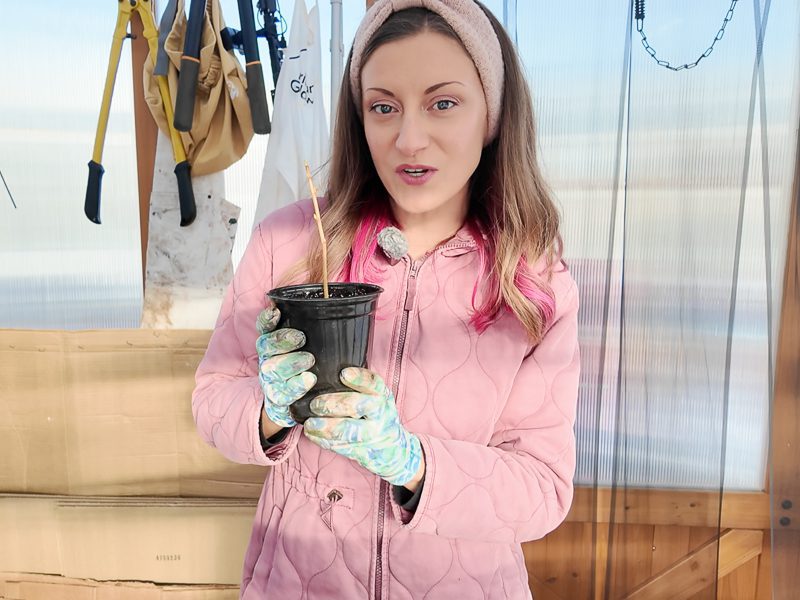
I used a well-draining soil mix consisting of leaf compost and perlite. Then I filled up a few pots and stuck my cuttings down into the pots so that about 1/3 to 1/2 of the cutting was buried. Gently pack in the soil around the cutting to keep it stable.
Step 3: Keep chilled & moist
Now it’s time for the easy part! And don’t forget about this one! You need to keep the cutting chilled. Currants and gooseberries need a certain number of “chill hours”—basically time in the cold—to be able to bud and bloom in the spring and summer.
If you keep these indoors on a heat mat or even in a heated greenhouse, you may not get the chill hours you need. Instead, put the planted cuttings somewhere that is protected from the worst of winter. But make sure it is somewhere that will still get rain and snow.
The goal is to keep the cutting relatively moist through the winter but not expose it to frequent freeze-thaw cycles. I buried one of my cuttings about halfway in a raised bed. For the rest, I just lined them up next to a raised bed to shield them from high winds. And that’s it 🙂 I’ll update in the spring!